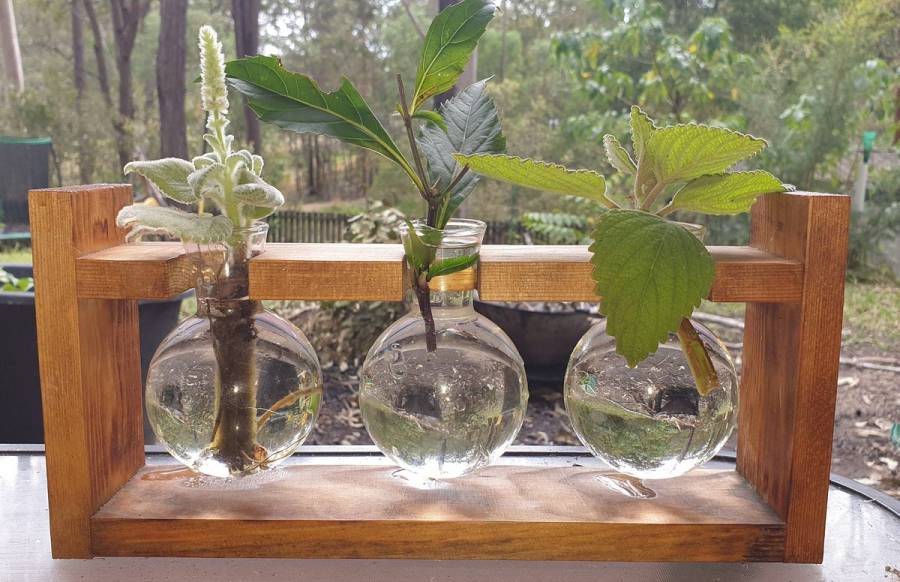
Another way to grow plants in small spaces or simply clone the plants you love to keep or to share with other gardeners!
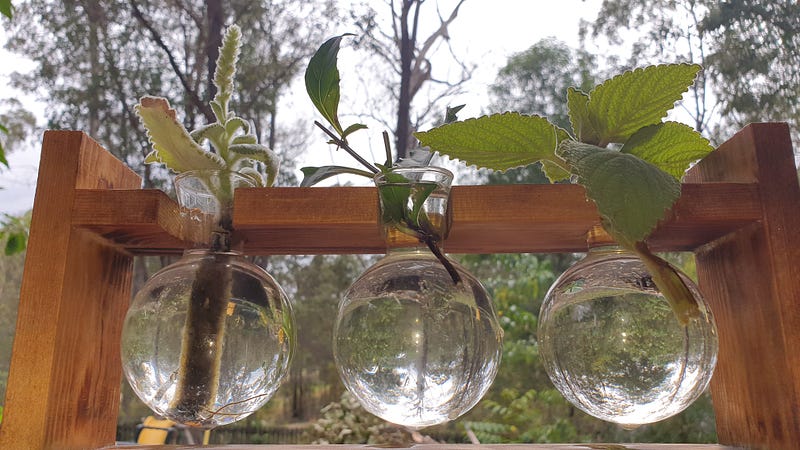
Propagation Stations are delightful additions to the home for the keen gardener, the urban gardener or the plant nerd in any location!
They look great, can be kept inside or outside, require no soil and no garden space. Some plants species will even live permanently in a propagation station, like the Lemon Sherbert Coleus (Coleus bellus)that will even flower without needing soil.
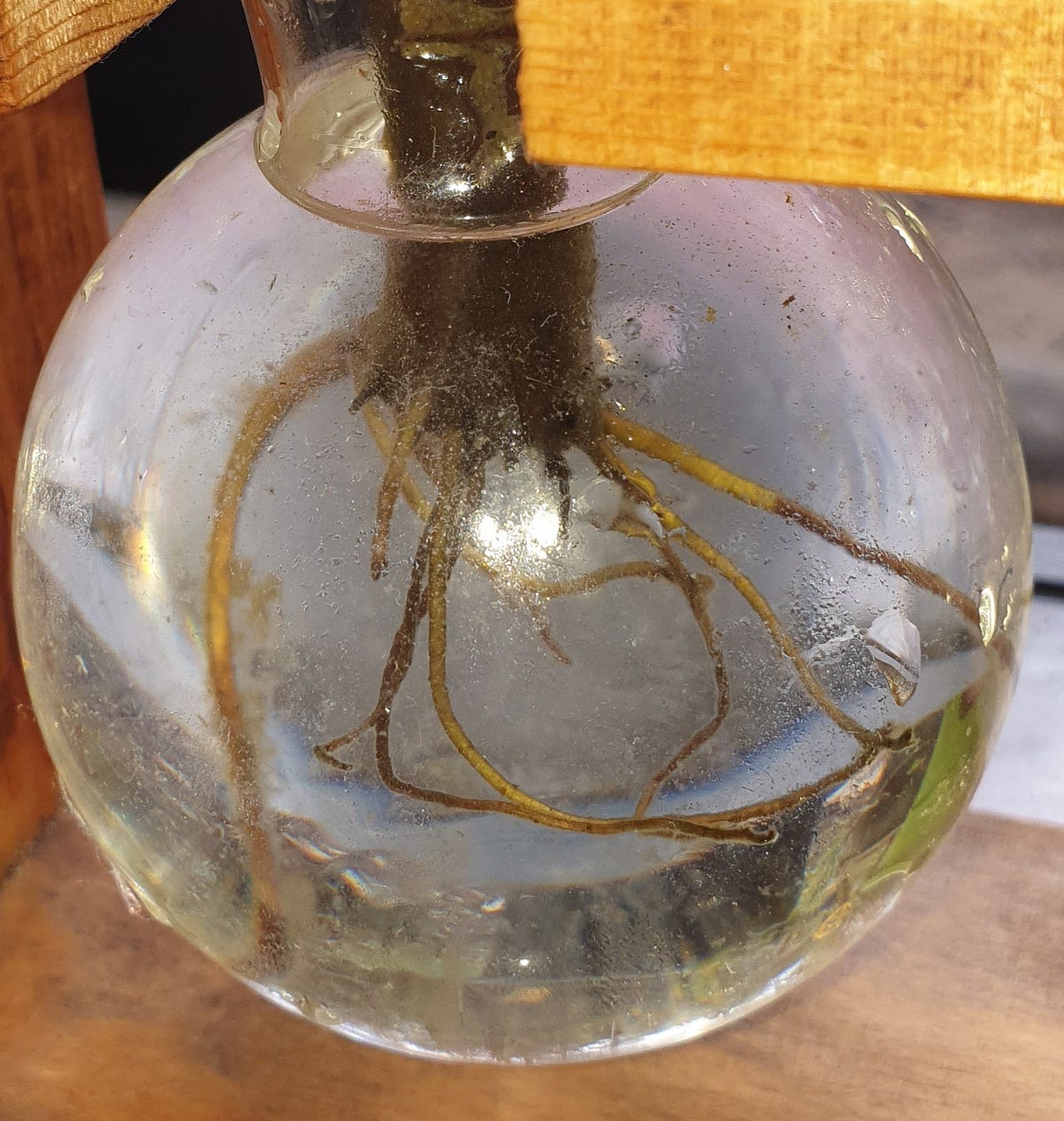
If you are serious about a constant rotation of plants to add to your garden or to share with others, the propagation station offers a clear view of developing roots so that you know when to remove and plant them out.
I first bought a propagation station for my desk at work. I wanted to keep plants on my desk but my coworkers insisted on having the air-conditioning running all the time.
The combination of dry, cool air and low light caused by anti-glare blinds so that we could see our computer screens were not favourable for most native or edible species. Those were the plants I wanted rather than the standard indoor office plants.
A propagation station mitigated the issues with the constant moisture levels provided by the water. As a bonus, they are becoming popular and so I purchased one for less than twenty Australian dollars.
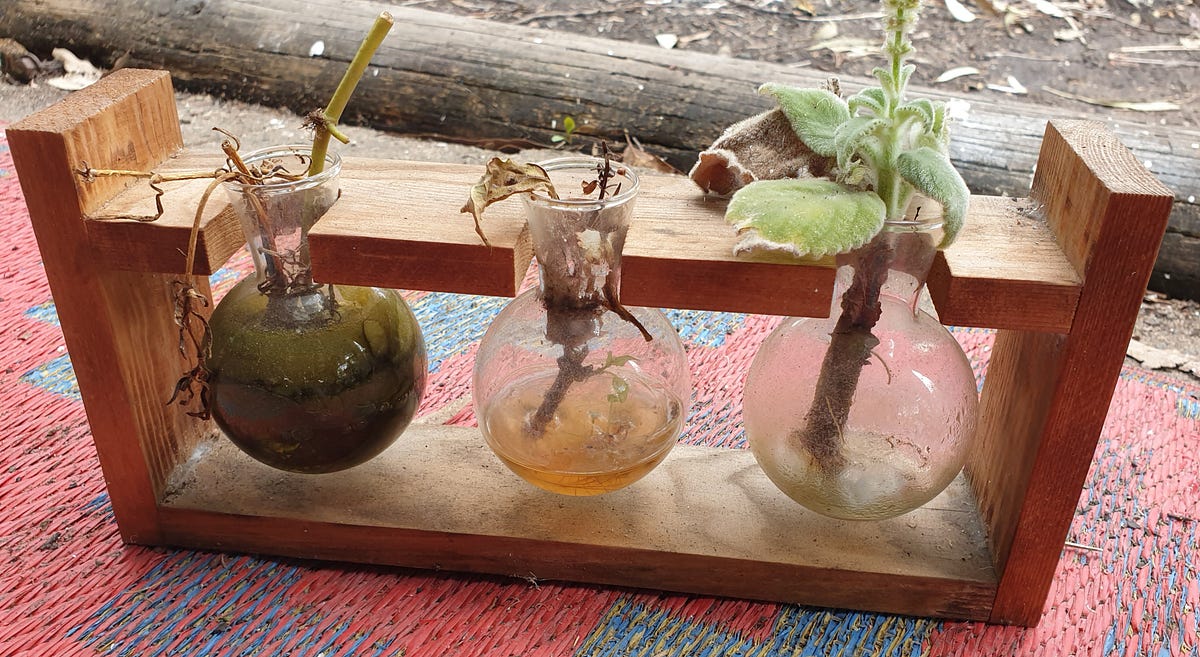
I don’t work there at the moment so the propagation station came home and was abandoned and neglected on the back patio. With the beginning of Spring and school holidays, I found the enthusiasm to clean it up and repopulate it. Happily, the Lemon Sherbert Coleus was still thriving!
Populating a Propagation Station
Populating a Propagation Station is as easy as taking a few cuttings from plants you love that will form roots in water. Most Coleus and Plectranthus species root readily in water. Many herbs can be propagated this way too. I’ve had a lot of success with different Basil (Ocimum) species.
I just read an article from Carissa Gallo about propagating Basil in water. She also explains the process in detail.
How I Cloned (Propagated) My Basil Plant
There’s few things as satisfying in the urban gardening space than propagating a favorite plant. After seeing a deal at…medium.com
One advantage of propagating in this way, as opposed to seeds, is that you get a plant that is identical to the parent. Some hybrid species like the wonderful Perennial Basil (Ocimum kilimandscharicum × basilicum ‘Dark Opal’) can only be propagated in this way as its seeds are sterile.
Simply cut a stalk from your chosen plant (soft new growth works best for this method) just below a leaf node. Strip all but the top leaves and place the stalk in water. Change the water every few days to prevent algae and rot.
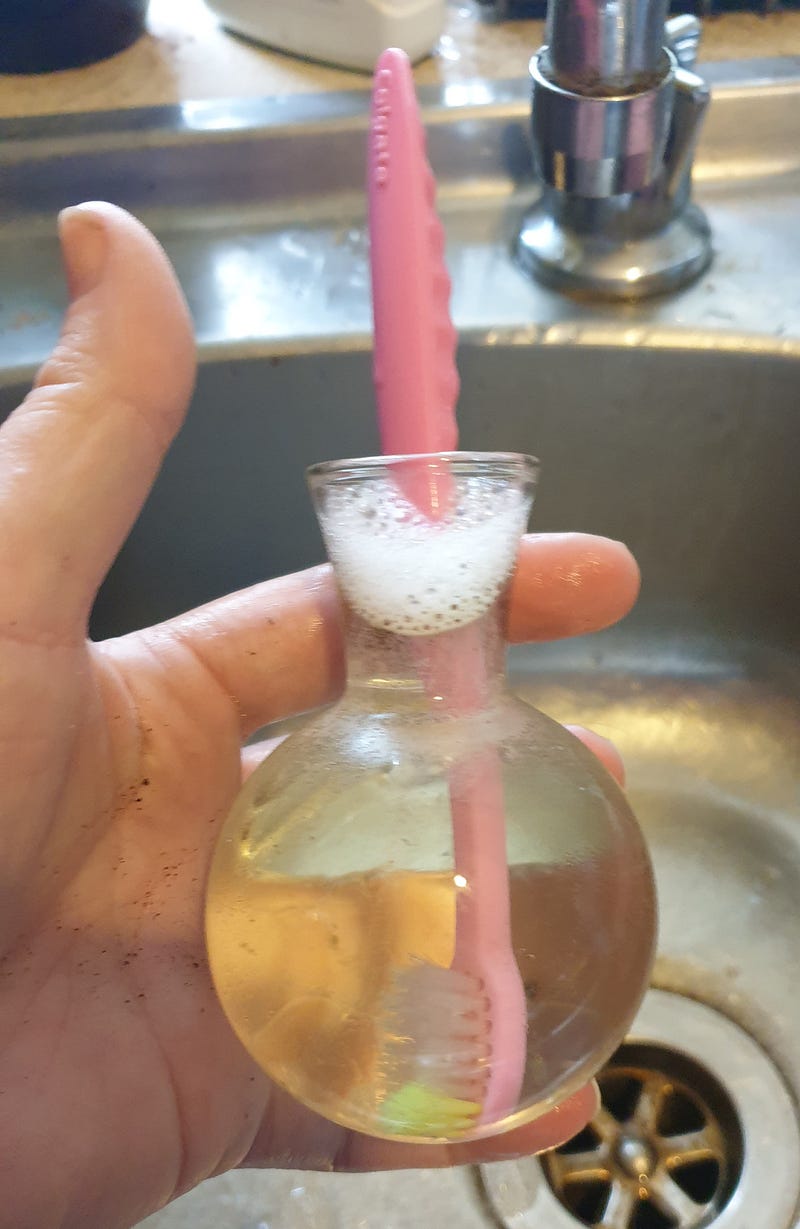
Cleaning your Propagation Station
To get full enjoyment from your propagation station, you need to keep the glass clean and clear. I find the best way to do this is to scrub it in hot water and dishwashing detergent with an old toothbrush. Be sure to rinse thoroughly. Fill with the best water you can get. We are lucky enough to have rainwater tanks so that’s the water I use.
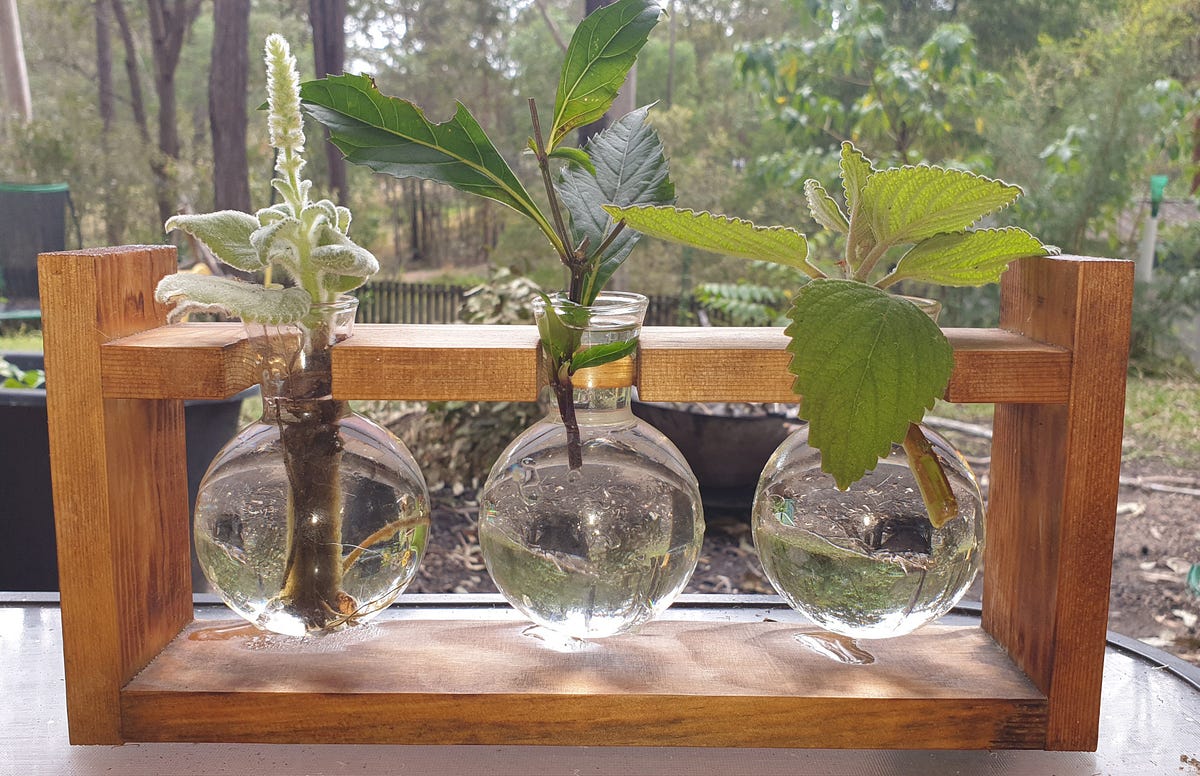
What’s onboard right now?
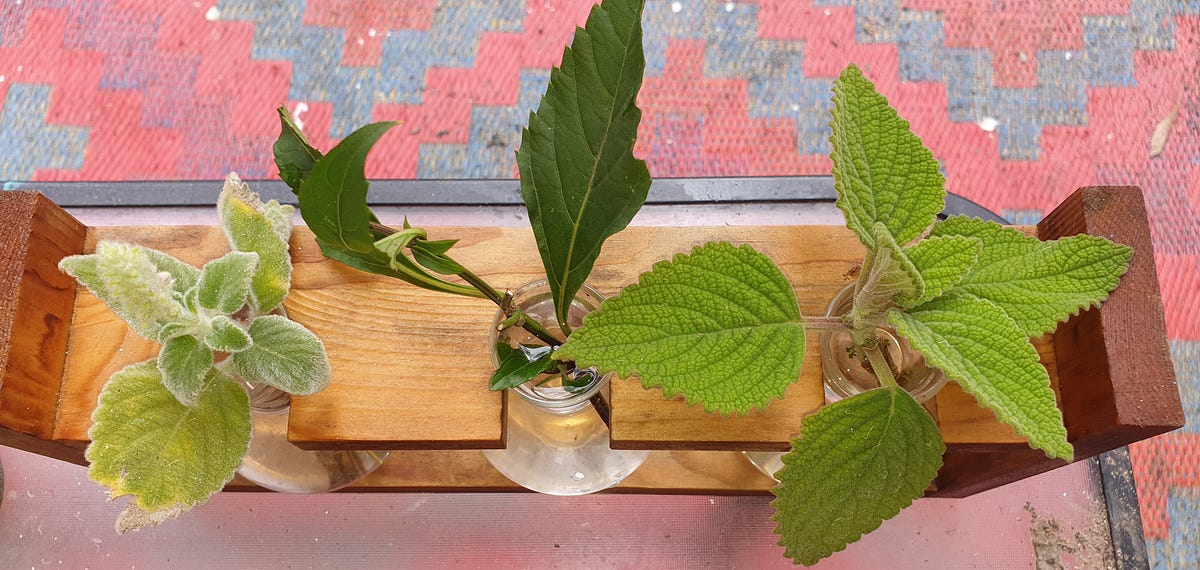
- On the left we have Lemon Sherbert Coleus (Coleus bellus). This is a rare species that only grows on the slopes of Mount Carbine in Australia’s Far North. I got my first specimen at a Native Plant Fair. I have discovered that it will happily live in a propagation station indefinitely, even flowering regularly. This particular cutting has been in the station for 6 months and you can see in the photos that it is about to flower again. the flower spike will be full of small blue and white flowers. If you crush the leaves, the air fills with Lemon Sherbert scent, zingy and refreshing. More information and photos here.
- In the middle is Green Pepper Basil (Ocimum selloi). This plant takes a few months to develop roots in water, but it’s a wonderful addition to any garden. The leaves taste like a mix of Green Capsicum and Basil with a Chilli kick. I love to add them to salads, pizzas and spaghetti bolognese. Yum!
- On the right is Bush Basil (Coleus graveolens), an Australian native with beautiful purple flower spikes and an aroma that has notes of many different herbs: Oregano, Mint, Basil and Sage. It can be used to make pesto or added to Mediterranean dishes (sparingly!) for a deliciously unique flavour! It roots easily in water after a week or two. More information here.
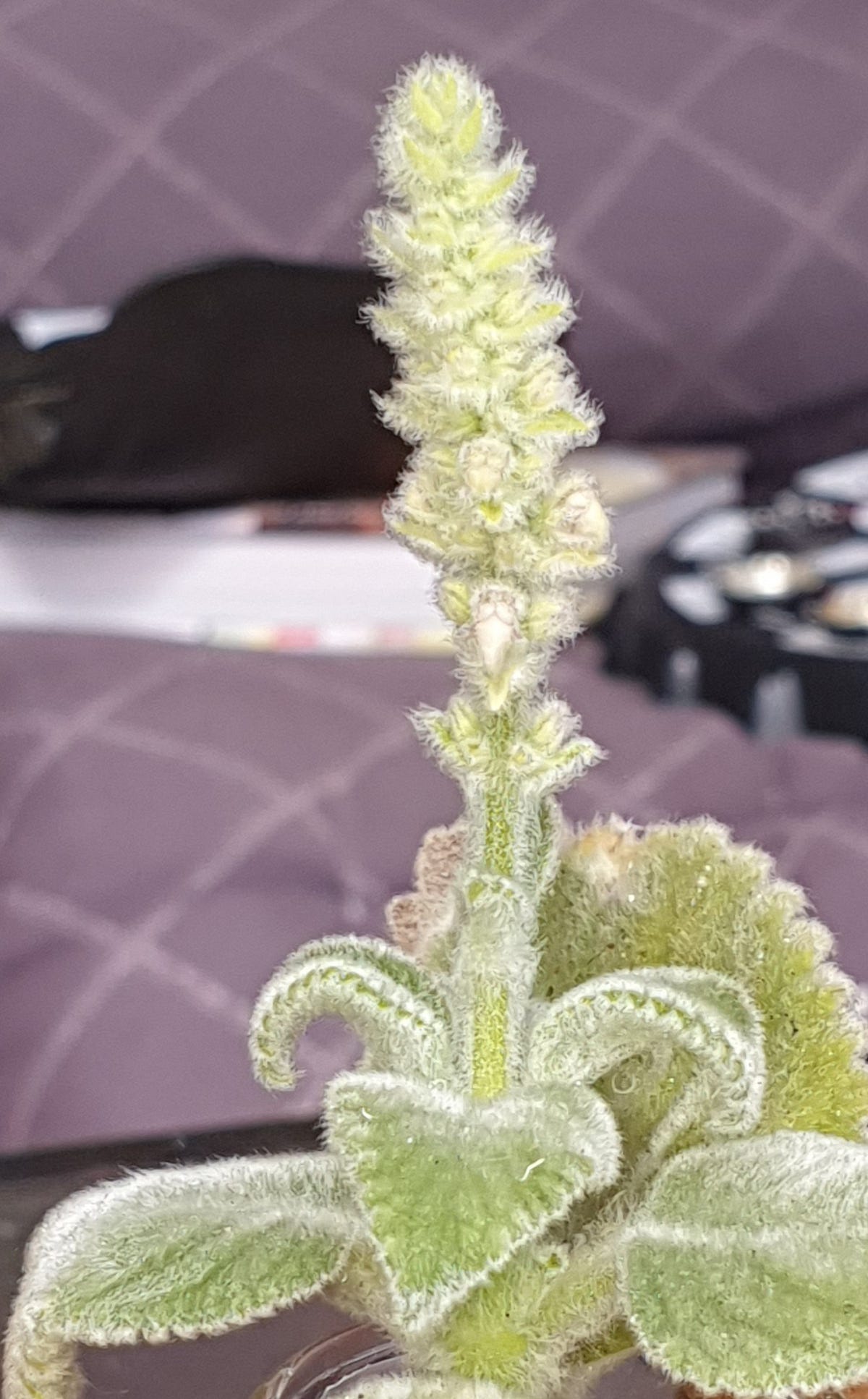
Propagation Stations are perfect for anyone who loves gardening. Their versatility makes them suitable for many different situations, as long as plant species are chosen appropriately.
Would you like an article on the plant species that will thrive in a propagation station? Tell me in the comments! Ask questions! Propagation is good for the plant and a lovely way to grow new plants.
Do you have some gardening tips? Do you write about gardening? Tea with Mother Nature is a new publication looking for submissions. You can read the submission guidelines here.
If you are not a Medium member and you’d like to sign up, please consider using this link to support me as a writer. You also get to read as many articles from the many talented writers on the platform as you want!
All aboard for Propagation Station! All the delights of new plants and watching them grow from the roots up at your destination!

 Jane Grows Garden Rooms