Photo a Day Challenge
Photo a Day Challenge: Week 40— September 9th to September 15th
This week was dominated by bees, specifically stingless bees. I have recently joined the Australian Native Bee Association and purchased a hive for my very own stingless bees.
On Saturday I went to my first meeting which was held at a house which is being renovated. As the young couple started renovating they discovered numerous stingless bee hives in the walls. They decided to host the meeting so that the bees could be rescued and given to people to take home.
I took photos all day and, in so doing, rediscovered the power of the brain to recognise patterns.
Did you know that you can train your brain? The more you observe and look for things, the more likely your brain is to recognise them and send a message to let you know. In this case, I’ve been seeing stingless bees everywhere! More about that later.
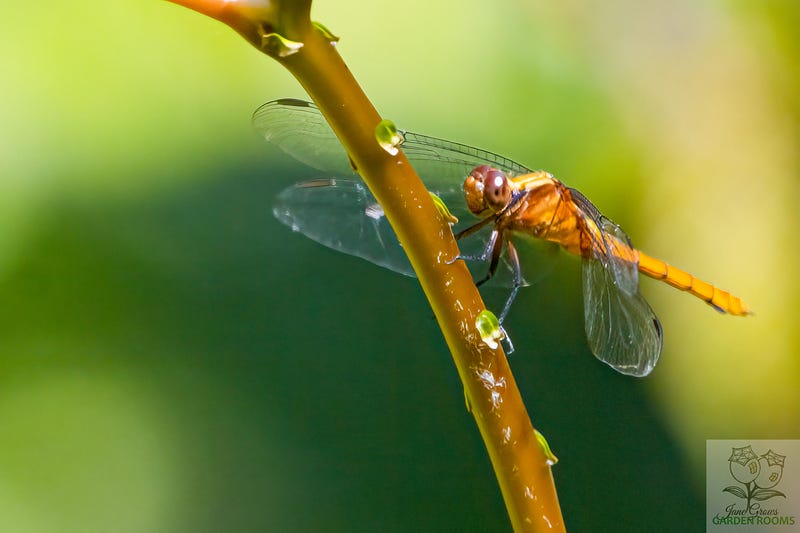
The feature shot is a dragonfly that landed near me while I was chasing butterflies. They’re much harder to photograph in the rainforest as they frequently rest in shade, but I’m looking forward to honing my skills again with some different species! Apparently this is a Fiery Skimmer and the colour suggests she’s a female.
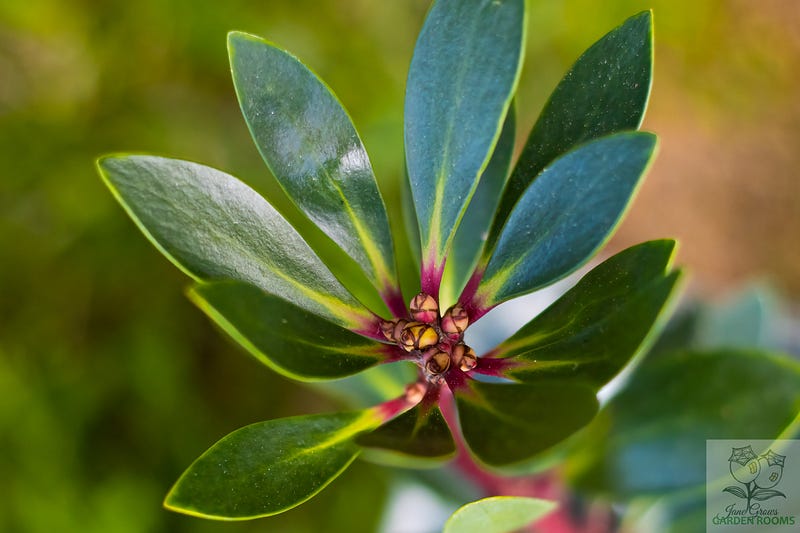
On Friday I had a very exciting package arrive! I’m starting a new garden experiment. I’m going to try to grow the cool climate species of Native Pepperberry in my tropical garden. I couldn’t find any details from anyone saying that it couldn’t be grown in the tropics so I decided to try myself and document the results on YouTube. This way, others can find the information that I couldn’t!
Meanwhile this is the female. Isn’t she gorgeous!?
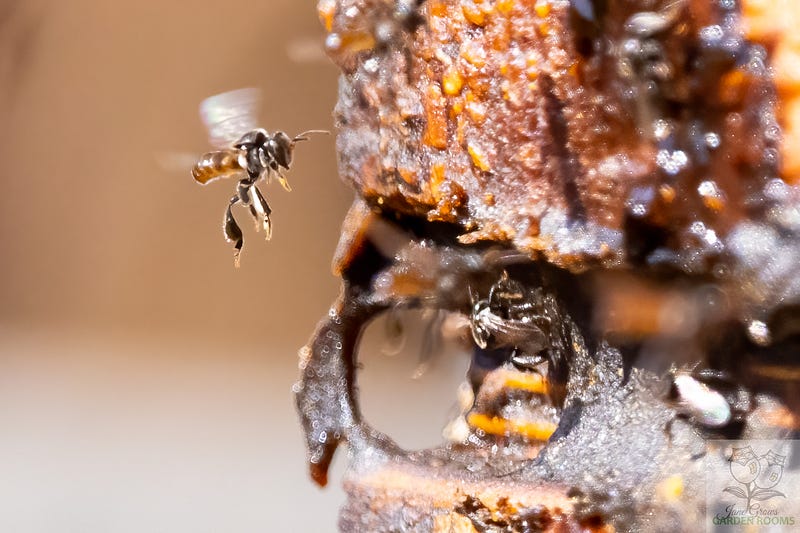
Ah the bees! These are some of Australia’s Stingless Bees. These little ladies are around 4mm long. They are tiny! They don’t sting but they do bite on occasion. The bite is easy to ignore. They produce Sugarbag Honey which has a lot more water than traditional honey, but is said to be (bee?) delightful. I would love to try some!
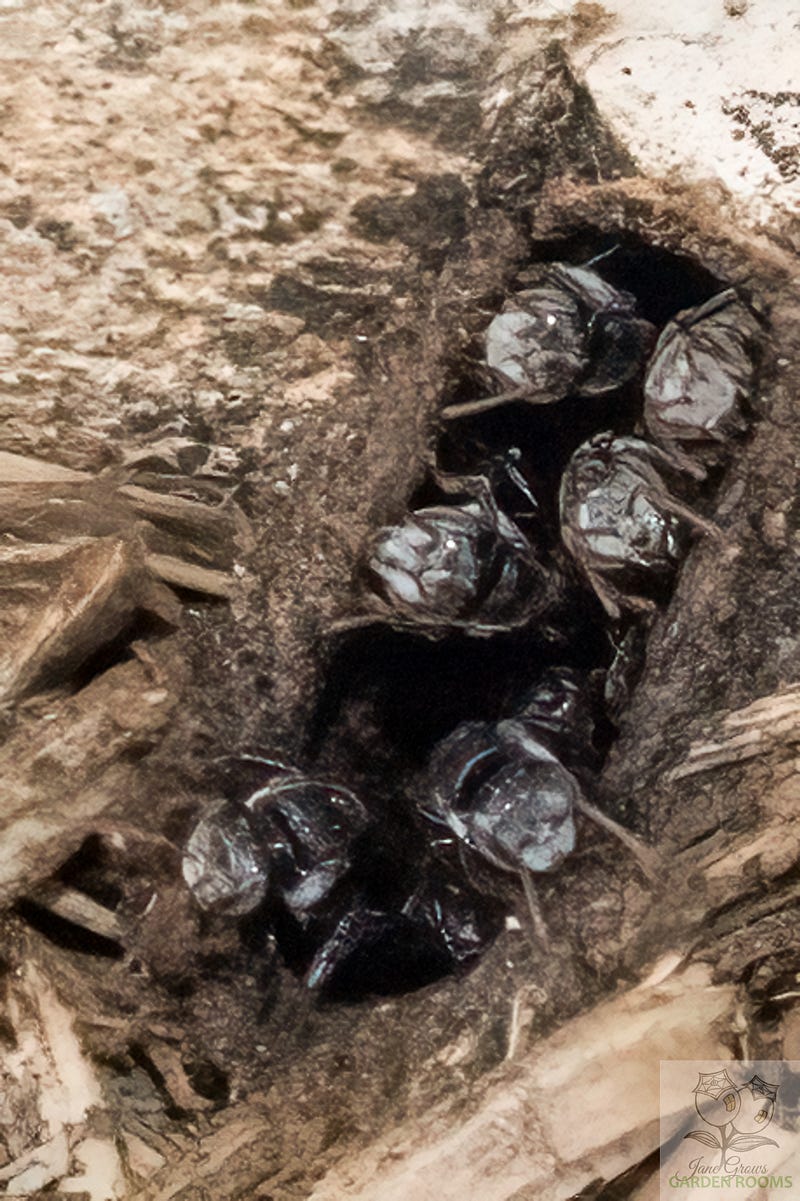
This photo shows what was under the cladding on one side of the house. You can see the construction that has taken place using dark brown wax and propolis.
My own empty hive has been left waiting to be filled when more of the house mentioned earlier is renovated. I can’t wait!
When I got home, my partner was aghast at the idea of the house filled with bee hives and said that my hive would be nowhere near the house.
I gave him some reassuring facts:
- Unlike the European Honey Bee hives, stingless bee hives do no structural damage and only need to be removed for their own safety.
- It was likely that we already have them in the house.
Sure enough, after a day of photographing bees and a night of editing the photos for the association, my brain was firing all the right signals to alert me to every stingless bee in the area.
We found three hives in our house! One in the kitchen window frame, one at the base of the house under my son’s bedroom window and another in an old wiring hole under my daughter’s bedroom window!
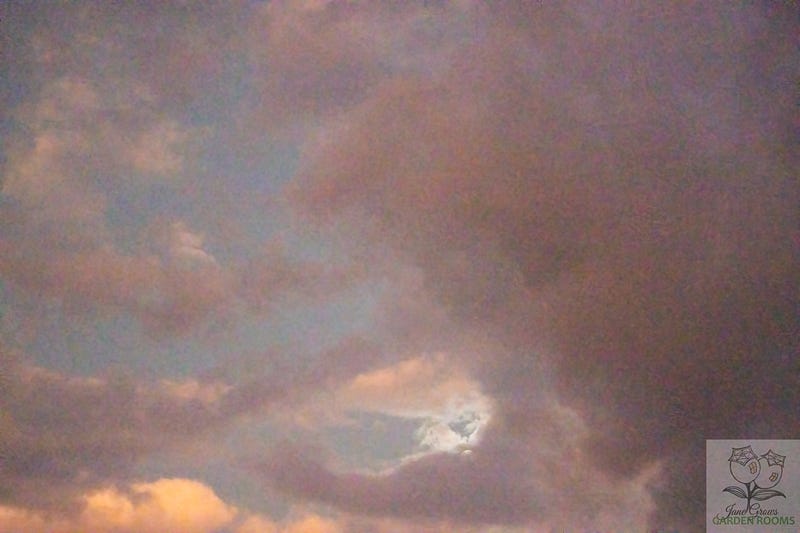
The only photos that I got on Monday was in the morning when the sunrise clouds were magical. That little highlight is actually the full moon peaking through. I didn’t quite capture the magic of it all but I can remember it! Sometimes the mind takes better shots than the digital machine!
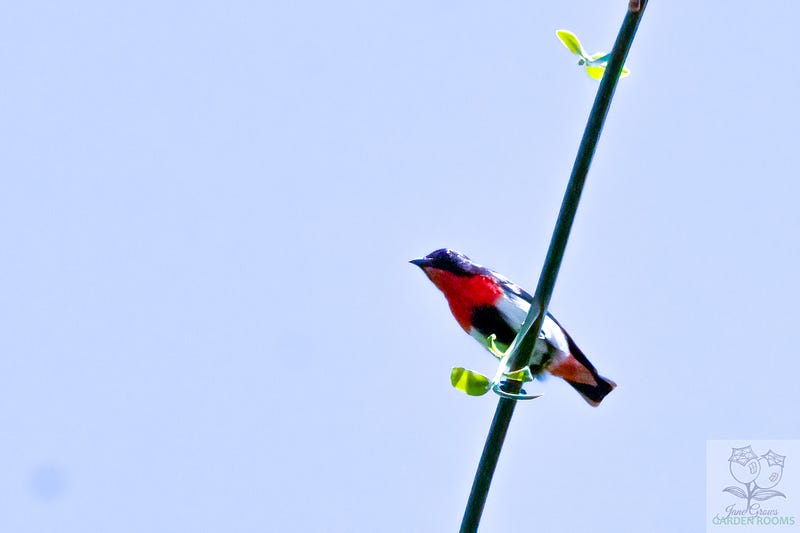
On Tuesday I chased this tiny bird all around the garden trying to get a photo. It’s a Mistletoe Bird and I was thrilled to see one. They are tiny and quick and stick to the canopy.
One of my favourite stories on Medium written by Bronwen Scott features these little wonders so I knew exactly what I was looking at.
Out on a Limb: Showy Mistletoes and Sticky Bottoms
A plant and bird come to an arrangement and everyone winsmedium.com

This is a Caper Gull Butterfly and despite being common with a large distribution, I don’t recall seeing one before. It was, of course, on my Perennial Basil which is a pollinator hotspot in my garden.

Work is always busy at the end of term and on Thursday I didn’t get out my proper camera at all. This is a quick shot of a beautiful orchid growing in school grounds. I am yet to identify it.
There ends a week of seeing Stingless Bees everywhere thanks to the amazing capacity of the human brain to recognise patterns. Incidentally it’s this same capacity that helps trackers become experts!
This story was originally published in online publication Weeds and Wildflowers as a part of their “Photo a Day” challenge.
Like to motivate Jane to keep writing? Buy her a coffee using this link. Or help her monetise her YouTube channel by subscribing and/or watching some of her videos.
Thank you!

 Jane Grows Garden Rooms