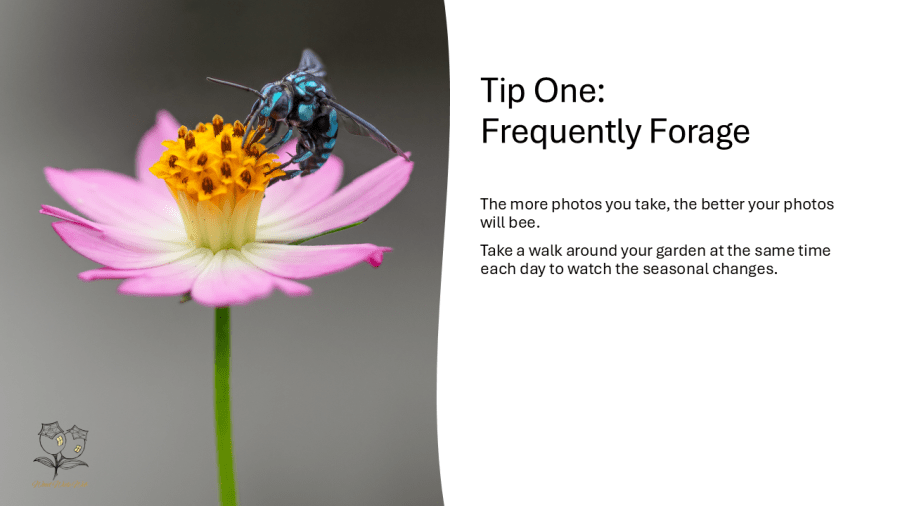
Simple tips to improve your bee photography
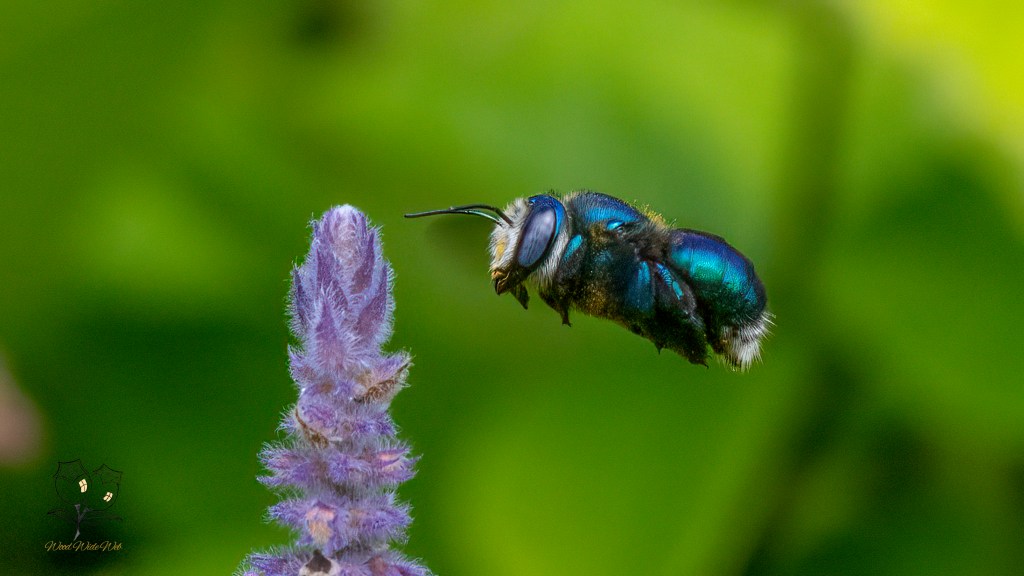
Recently I was asked to give a presentation about bee photography for the Australian Native Bee Association branches in Brisbane and on the Cassowary Coast. Here’s the blog version – follow to make sure you get all five tips! Rather watch or listen than read? Watch on YouTube by clicking below!
For most of my life, I, like many Australians thought bees were the European Honey Bee. One day about 15 years ago, I was scrolling through Facebook and saw a post from an old schoolfriend. She was super excited because she had Blue Banded Bees in her yard. What?! From that point on I started looking into Australian Native Bees. I’ve gone from one goal to the next. The first, of course, was to see Blue Banded Bees in my own garden. It would take another five years to achieve that goal! Many goals later, my current goal is to see a male Great Carpenter Bee in my garden. I see plenty of the females season after season but not the boys!
My bee photography journey began when I discovered the Australian Wild Pollinator Count online. Some of my photos were chosen as feature photographs of the count. At this point my DSLR was malfunctioning and so I was just using my phone camera. I started watching bees to count them and I noticed that as I watched, I got better at photographing them.
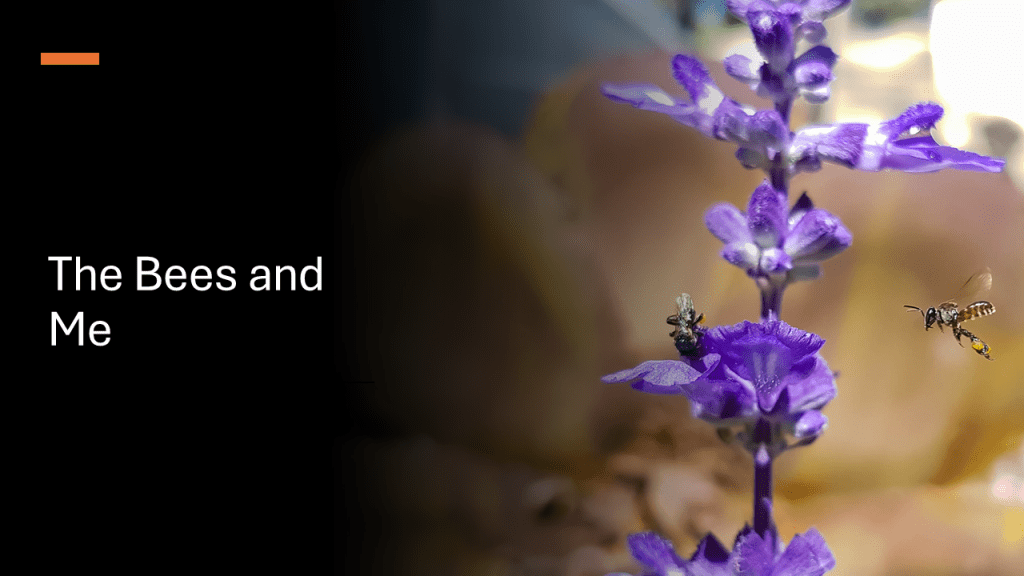
This photograph above was the one that hooked me! I couldn’t believe that I had captured a tiny stingless bee in flight. Soon I was photographing all the time. I got a new DSLR and started a challenge for a writing platform called “A Photo a Day” and kept my camera close whenever I was outside. I got photos of birds, reptiles and all manner of insects. In 2022, there was the inaugural pollinator photography competition run by Wheen Bee.
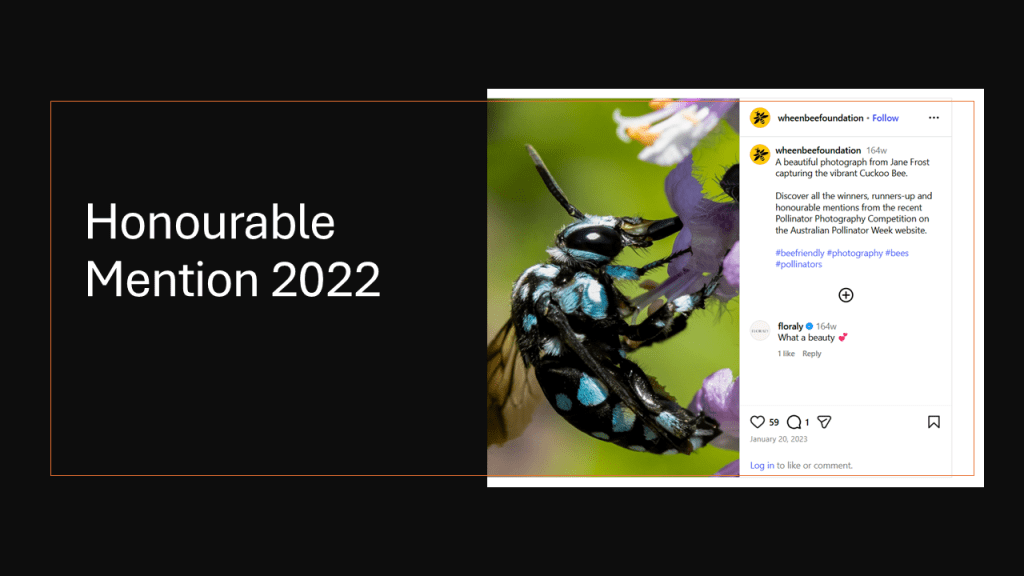
An honourable mention – I couldn’t believe it!
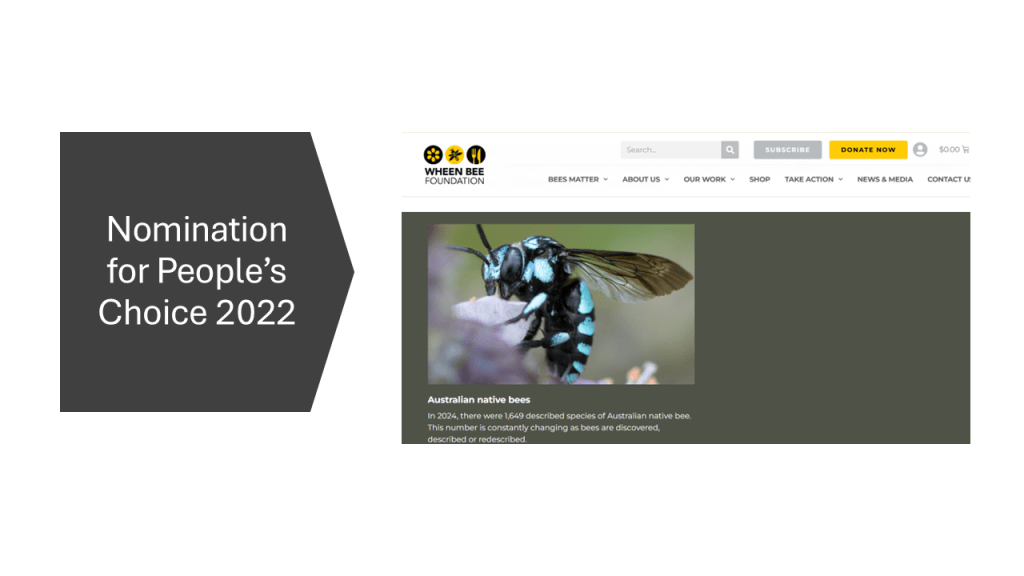
In the same year I was nominated for a People’s Choice award and that photo is still featured today in Wheen Bees Native Bee library.
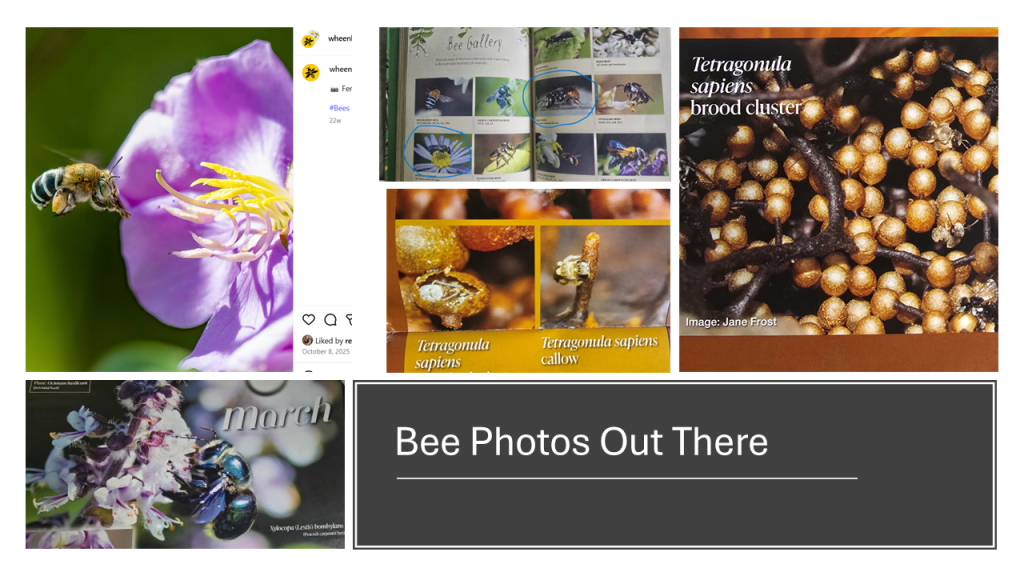
I am now thrilled to see that my photos are being used to illustrate online content, in calendars and in Jaclyn Crupi’s book Planting for Native Birds, Bees and Butterflies.
Anyway, enough about me! Let get into the promised tips!
Tip One – Frequently Forage
In order to get those photos and improve your photography you need to be out taking photos as often as possible. There’s a reason for that old saying…
Practice makes perfect!
By getting out there and taking photos you are training your brain to recognise and focus in on the bees in your garden. You’re also more likely to find those “wow” moments when bees are behaving in unique ways.
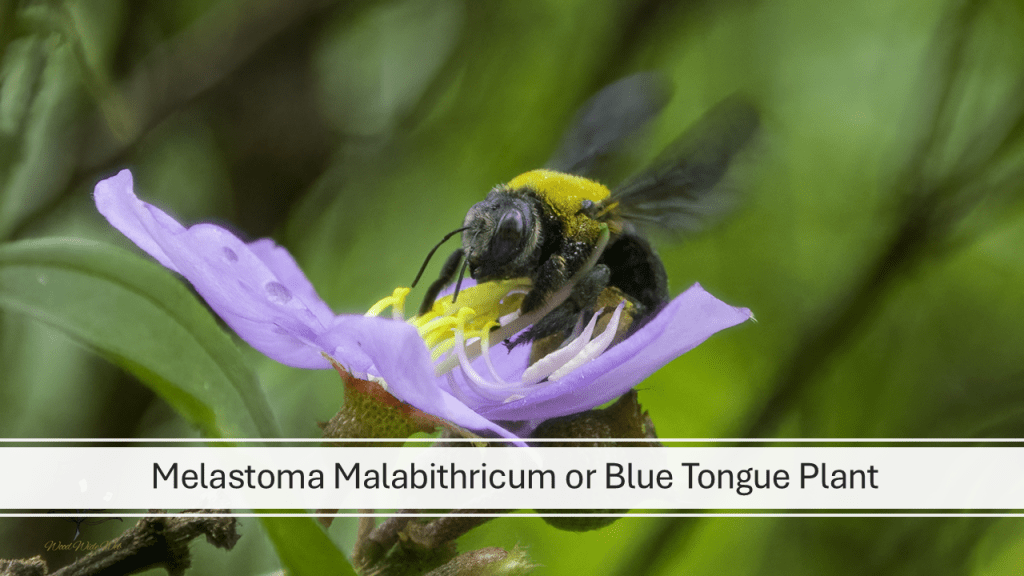
Above is an example: this is the Blue Tongue Plant or Melastoma malabithricum. It is native. It’s called Blue Tongue because the berries make your tongue blue if you eat enough of them. It’s like those lollies you can buy. I’ve observed that this plant is loved by Masked Bees and Great Carpenter Bees.
You can see how this Great Carpenter female is gripping the anthers. She’s about to buzz pollinate. I thought this meant vibrating their whole body, but really it’s their head that they bang against the anthers to release the pollen. Just a few moments after this photo I got another shot that illustrates this…
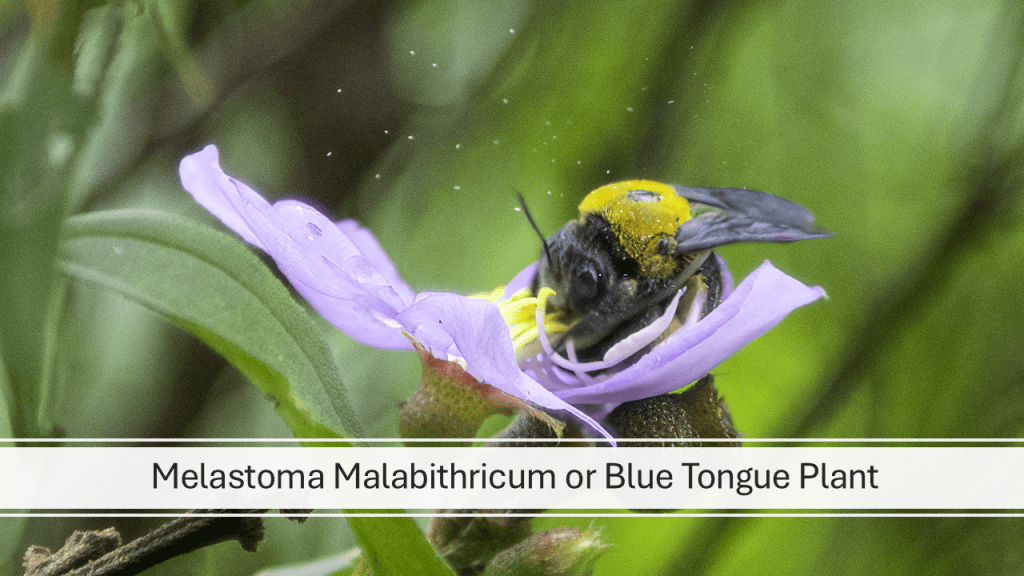
At first glance I thought that I had messed up the focus but you can see the flower and thorax are sharp. It’s only the head that is blurry. The shutter speed was 1/640th of a second which means that she is head banging more than 640 times per second.
Can you see the pollen spraying into the air and falling back on to her body?
So getting out there to take photos doesn’t just improve my photography it allows me to make observations that in turn allow me to plant flowers that nurture my bee population. It does help that I’m in the tropics so the bees are active most days of the year. So that’s my first tip – you want better bee photography, get out there as often as you can!
Don’t forget to follow this blog for four more simple photography tips!
Want to see more of my bee photography? Check out my YouTube channel!


