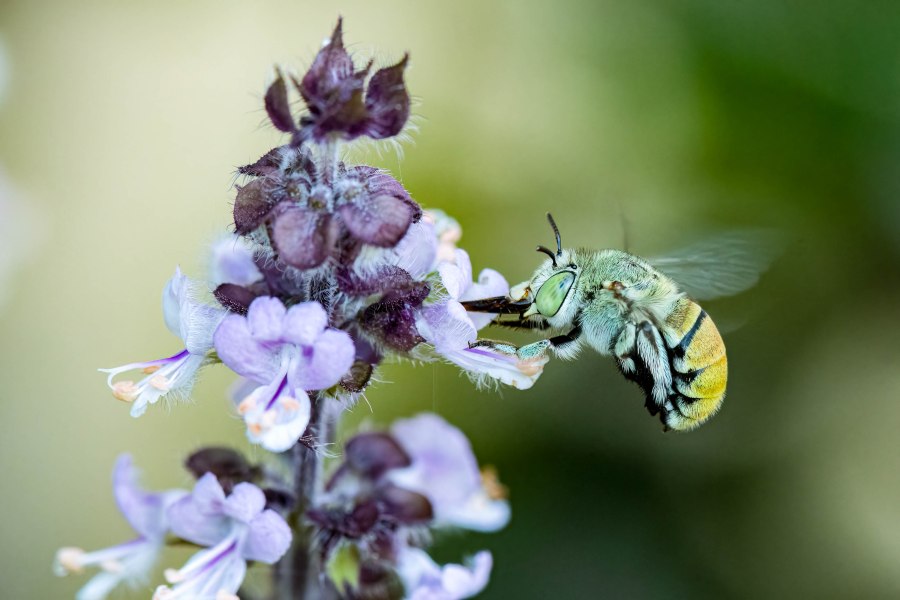
At first sight in my new Far North Queensland garden I was shocked by this bee. It had all the hallmarks of Amegilla but no bands like Blue-banded Bees and it wasn’t a Teddy Bear Bee. Kit Prendergast, an Australian scientist who researches bees, came to the rescue with an identification. Despite being first described… Continue reading The Green and Golden Amegilla aeruginosa
Author: Janegrowsgardenrooms

Leafcutters and Resin Bees
Leafcutters and Resin Bees are both in the Megachile genus. I’ll never forget the first time I saw precisely cut leaves poking out of a hole in my bee hotel. This was my first encounter with a Leafcutter Bee and I’ve not had many encounters since. They are elusive and fast, both while cutting the… Continue reading Leafcutters and Resin Bees
Tiny Buzz – Homalictus Bees
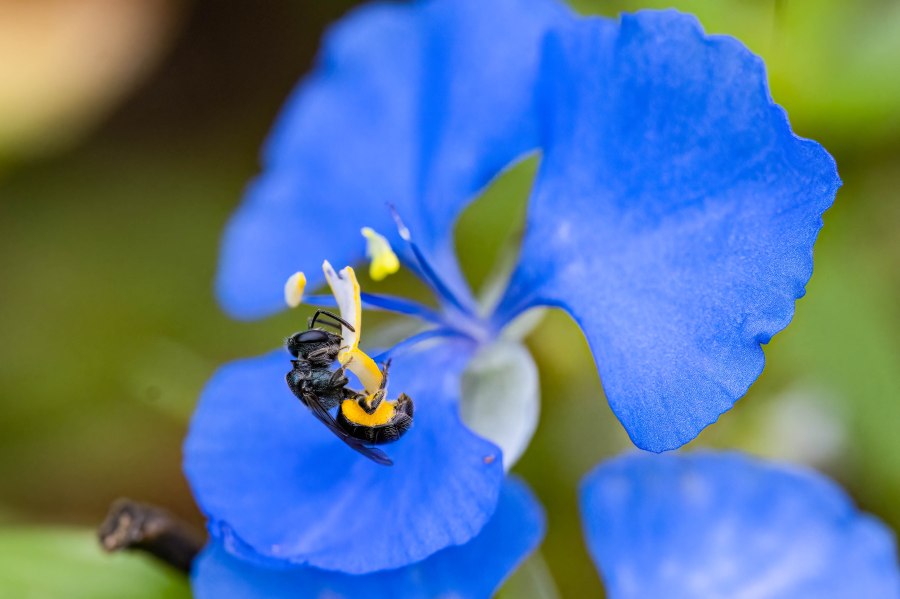
Most of the bees in this subgenus (of genus Lassioglossum) are less than 8mm long. The one in the feature photo (Homalictus urbanus) is between 4 and 5mm long! She is foraging from a tiny Commelina flower. They have relatively short tongues so prefer open “flat” flowers where it’s easy to reach pollen and nectar.… Continue reading Tiny Buzz – Homalictus Bees
Australia’s Cuckoo Bees
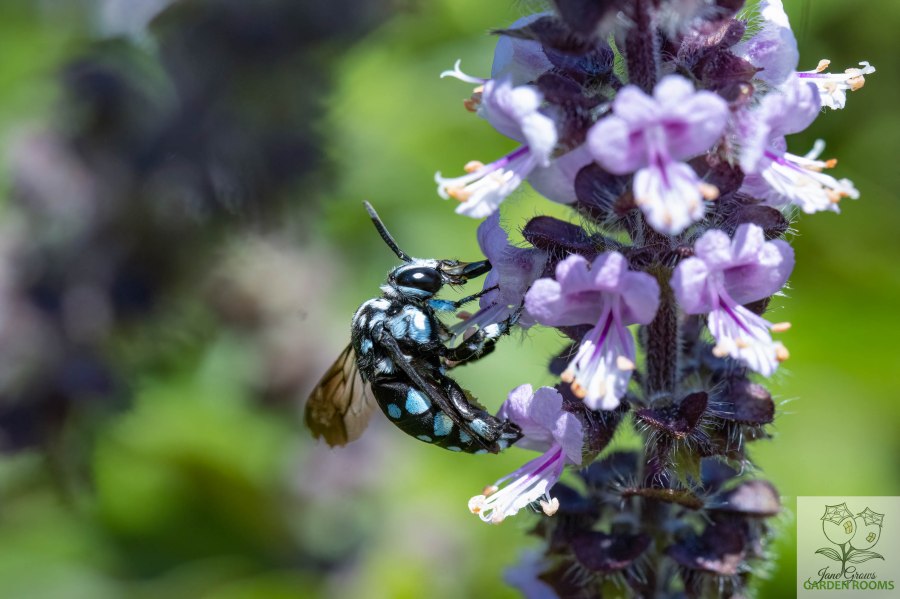
These criminals of the bee world are deceptively beautiful. They buzz through the garden, bright colours or patterns grabbing the attention of the attentive gardener, but they work against other bee beauties. They are also known as “Cloak and Dagger Bees”. Coelioxys species use the newly built nests of Megachile species to lay their own… Continue reading Australia’s Cuckoo Bees

Australian Mellitidia
Who will solve the Mystery of the Australian Mellitidia? Just look at that gorgeous bee! She’s small, gold and awfully busy. She doesn’t care that “busy” is a bee stereotype. She has more important things to worry about. She’s probably nesting in ground burrows. From my observations, she appears to be a buzz pollinator. She… Continue reading Australian Mellitidia
Australia’s Largest Bee – The Great Carpenter
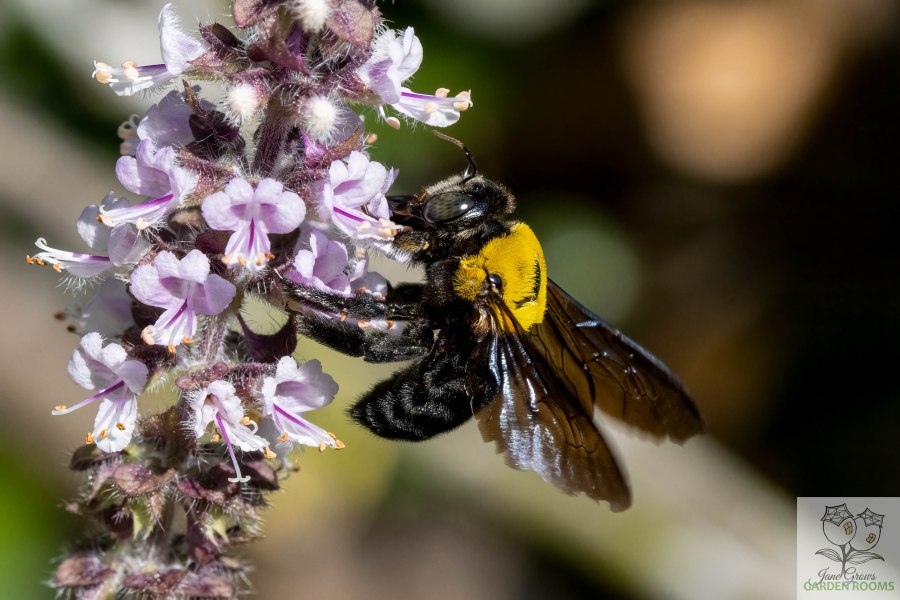
Scientific Name: Xylocopa (genus) She sounds like a jet engine in comparison to other buzz pollinators. He probably does too, but I’m yet to find a male! At around one inch or two and a half centimetres long, the Great Carpenter Bee is Australia’s largest bee and yes, they are capable of stinging. They don’t… Continue reading Australia’s Largest Bee – The Great Carpenter

Masked Bees – Hylaeus Bees
Hylaeine Bees are found on EVERY continent except Antarctica. They have facial markings that resemble the emarginate eyes of wasps. More than 200 species are distributed throughout Australia. The facial markers that earn them the “masked” label are usually more elaborate in males. They usually nest in holes in wood, made and abandoned by borers.… Continue reading Masked Bees – Hylaeus Bees
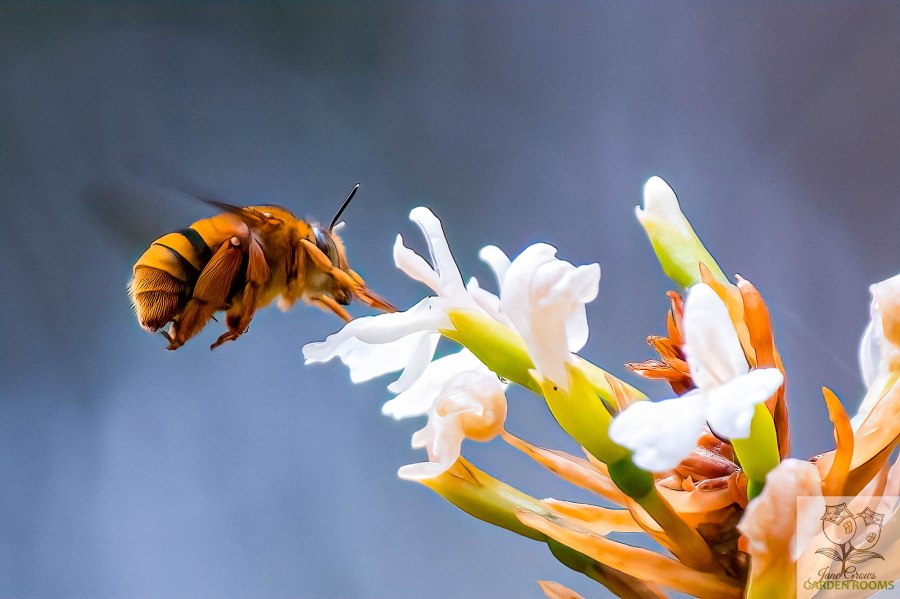
Teddy Bear Bees
This shy species is very difficult to find in the garden. Like most Amegilla species, Teddy Bear Bees are quick and fly in erratic patterns, probably to elude predators. With their audible buzz and golden colouring they are sometimes mistaken for Bumblebees. While each bee provisions a nest by herself, Teddy Bear Bees have been… Continue reading Teddy Bear Bees
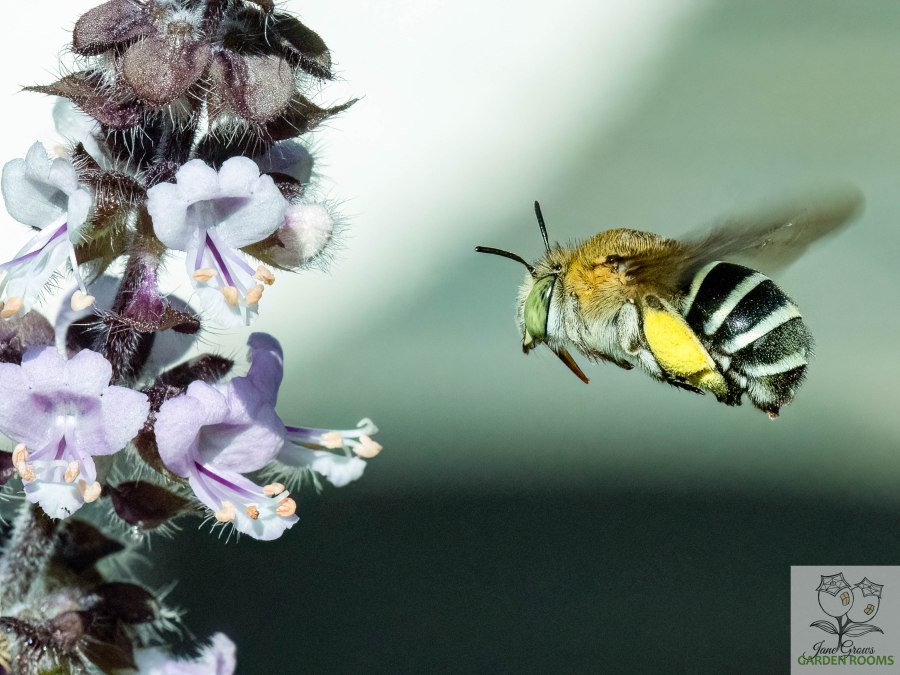
Blue-banded Bees
Despite being called “Blue-banded Bees”, many banded Amegilla species are not blue at all but range from blue to white and possibly green! I have heard it said that they are Australia’s most photographed bee and it’s no surprise! With their amazing eyes, iridescent bands and alluring buzz they make great subjects. The iridescent bands… Continue reading Blue-banded Bees
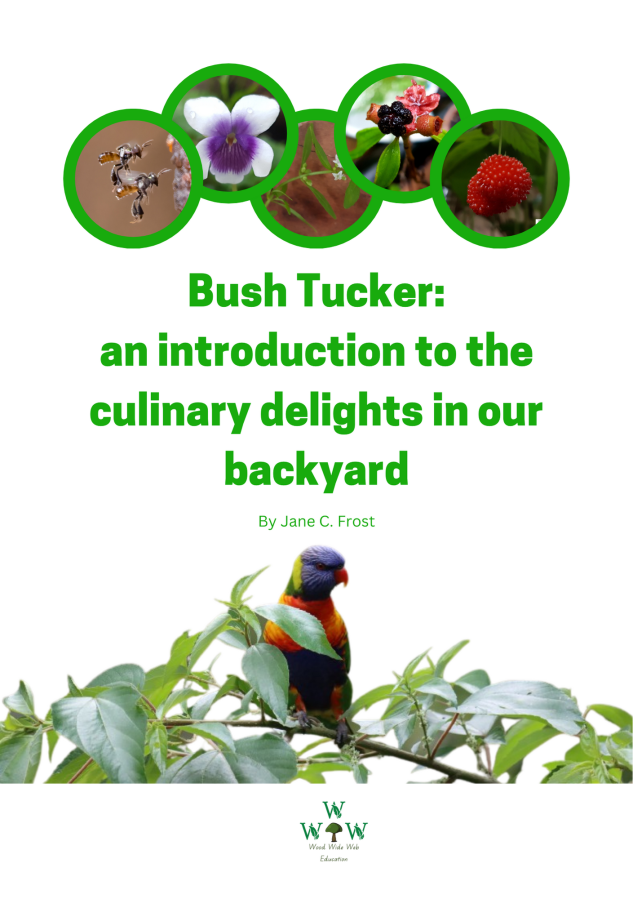
An Introduction to Australian Bush Tucker
NEW eBook with 52 easy to read bush food profiles I’ve just published my first eBook! It’s a collection of profiles with information like alternative names, growing conditions, history, cultural uses and edible uses. You can find it on Etsy or by clicking here you will receive a 10% discount until January 22, 2023! Here’s… Continue reading An Introduction to Australian Bush Tucker

